

HairTribal braids · Fulani cornrows
Fulani braids in Lucerne & Ebikon
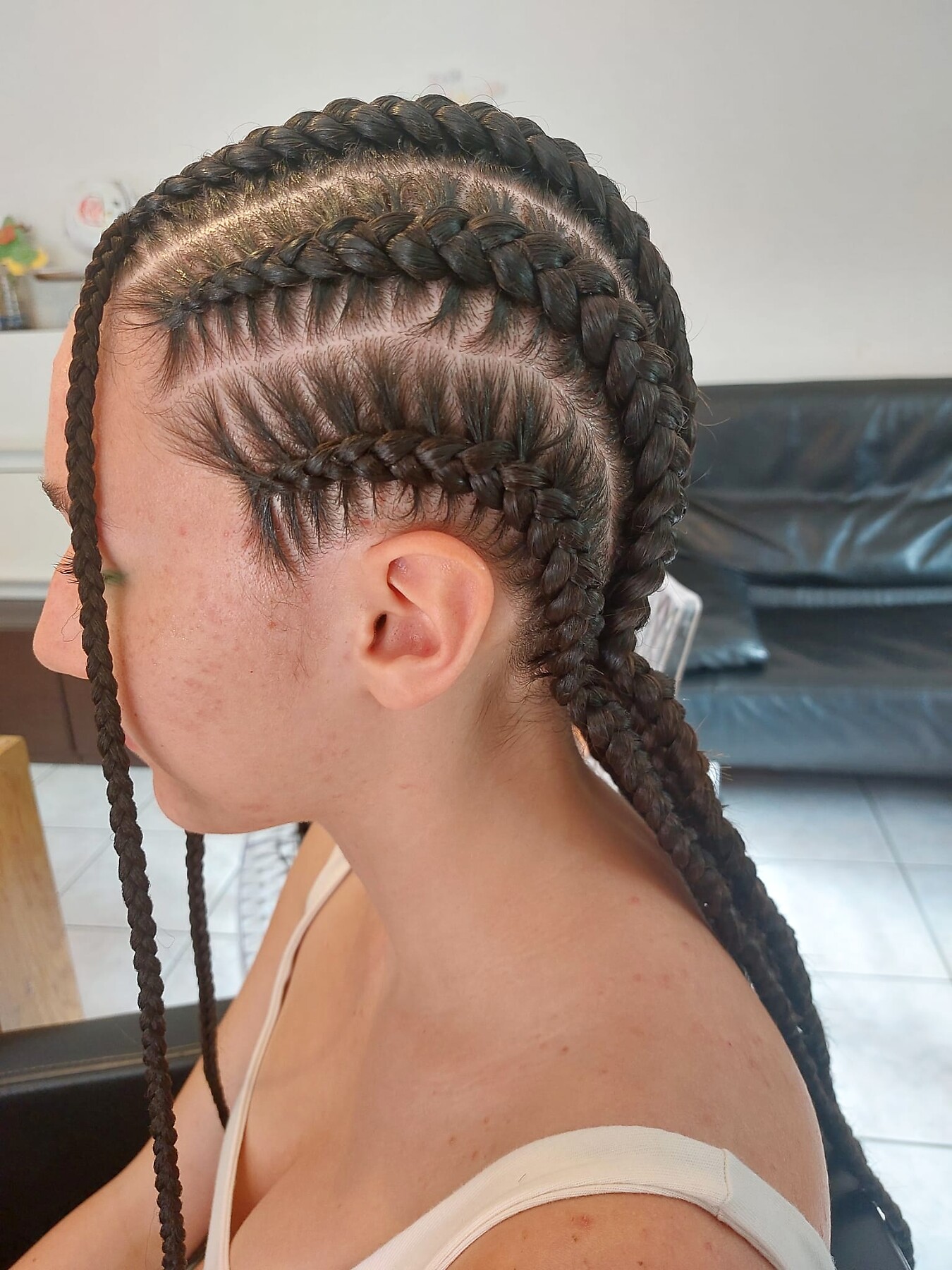
Cornrows and free-hanging braids in one look, often decorated with beads and metal rings — a style with West African roots, braided in Ebikon near Lucerne.
What are Fulani braids?
The style,
explained.
Fulani braids come from the braiding tradition of the Fula (Fulani) people of West Africa. Typical features are a centre-parting cornrow, side cornrows running forward or back and long free-hanging braids at the back. Beads, rings and cowrie shells add a personal touch.
For a bold look at celebrations, on holiday and at festivals — or simply because you want to show your roots or wear a distinctive style.
- Also known as
- Tribal braids, Fulani cornrows, Alicia Keys braids
- Price & duration
- Confirmed personally
- Open
- Every day 9 am–4 pm, Sundays included
What's possible
Beads, rings, shells
Centre parting or patterns
With extensions to waist length
Perfect for celebrations & holidays
Studio or home visit
Process & care
How it works
Together we decide on the cornrow layout, the length of the hanging braids and the jewellery. Combining two techniques takes some time; Cathy confirms the duration with your appointment.
To make it last
Check the jewellery before sleeping, use satin and care for your scalp regularly. The cornrows at the root can be refreshed if needed.
Why Cathy
Open every day, Sundays and Mondays included. At the studio in Ebikon or as a home visit around Lucerne. Advice in English, French and German.
Questions · Fulani braids
Good to know,
before you book.
Where do Fulani braids come from?
+
The style comes from the tradition of the Fula (Fulani), a people of West and Central Africa for whom braided styles with jewellery have a long history.
Do I bring the jewellery myself?
+
Happily, if you have your own beads or rings. Otherwise we discuss the jewellery with your request.
Can I get Fulani braids for a wedding?
+
Yes, Fulani braids are a popular celebration style. Plan the appointment one or two days before the event.